Independent guide · Cumbria
Lake District Glamping, Without the Sales Pitch
We do not take bookings and we earn nothing when you book. What follows is what we would tell a friend who asked where to sleep under canvas — or under curved larch — in the Lake District.
TL;DR
- Glamping in the Lake District means a proper bed under a solid or semi-solid roof — pods, shepherd's huts, yurts, safari tents and bell tents, almost always with electricity.
- Budget £95–£145 a night for a basic two-person pod, £150–£240 for an en-suite pod or hut, and £220–£400+ once a private hot tub is involved.
- July and August cost roughly double a wet Tuesday in March. May, June and late September are the sweet spot.
- Two-night minimums are standard. One-night stays exist but you hunt for them midweek and out of season.
- Dogs are welcome at a large share of Lakeland sites, usually for £8–£15 per dog per night.
The Lake District holds roughly 16 lakes, 214 fells and something close to 18 million visitors a year. Glamping sits in an odd gap in that market. It costs more than a tent and less than a cottage, it books up faster than either, and the quality range between two sites charging the same £140 a night is enormous.
So this guide exists to sort that out. We map every kind of glamping accommodation you will meet in Cumbria, what each one actually costs, which valleys suit which trip, and where the listings quietly mislead. No booking widget. No commission.
What glamping means here, in plain terms
Glamping is camping with the discomfort engineered out. The tent has a floor you can walk on in socks. The bed has a mattress rather than a mat. Electricity arrives through a socket instead of a power bank.
The Lake District version has its own accent. Cumbrian weather is wet — Seathwaite in Borrowdale is the wettest inhabited place in England, at about 3,300mm of rain a year — so solid-walled accommodation dominates. Timber pods vastly outnumber canvas across the national park. Yurts and bell tents exist, but they cluster in the drier eastern fringes around the Eden Valley and the Lyth Valley, and most fold up for winter.

The five accommodation types you will actually be choosing between
| Type | Typical nightly rate | Sleeps | Open | Best for |
|---|---|---|---|---|
| Camping pod | £95–£145 | 2–4 | Often year round | First-timers, walkers, short breaks |
| En-suite / luxury pod | £150–£240 | 2–4 | Year round | Couples who want a shower to themselves |
| Shepherd's hut | £140–£230 | 2 | Year round | Romantic two-nighters |
| Yurt | £120–£200 | 4–6 | April–October | Families who want space and a wood burner |
| Safari tent | £170–£290 | 6–8 | April–October | Two families sharing, self-catering |
| Bell tent | £75–£130 | 2–5 | May–September | Cheapest way in, festivals, groups |
Add a private hot tub and the whole table shifts up by roughly £60 to £110 a night. That single amenity moves price more than location, season or bed count. We spend a whole section on whether it earns its keep.
What it costs, honestly
Prices in the Lakes follow the school calendar with brutal precision. The same pod that goes for £95 on a Tuesday in late March asks £195 in the second week of August. Nothing about the pod changed.
Season by season
- January to mid-March. Cheapest of the year. Short days, closed campsite kitchens, glorious empty fells. Pods only — canvas is shut.
- Late March to May. Our pick. Daffodils in Grasmere, lambs everywhere, rates still 30–40% below peak. Easter is a spike island in the middle of it.
- June. Long evenings, water warming up, prices climbing but not yet silly.
- July and August. Peak. Search volume for Lake District glamping roughly doubles. Book four to six months out or accept scraps.
- September. The other sweet spot. Warm water, thinning crowds, rates dropping from mid-month.
- October to December. Bargain territory again, minus half-term and the fortnight before Christmas.

Costs the listing price hides
Sticker price rarely survives checkout. Watch for:
- Dog fee, £8–£15 per dog per night, sometimes per stay.
- Hot tub charge billed separately, £30–£50, at a minority of sites.
- Bedding hire where beds are not made up, around £15 per person.
- Firewood, £8–£12 a net, and you will burn two.
- Parking at a distance from your pod — free, but a nuisance with a toddler and four bags.
Where to base yourself
Cumbria is small on the map and slow in the car. Kirkstone Pass takes 25 minutes to cross and hurts. Choosing the right valley matters more than most visitors expect.
| Area | Character | Nearest hub | Watch out for |
|---|---|---|---|
| Windermere & Bowness | Busy, well served, lake on the doorstep | Windermere station | Summer traffic, premium pricing |
| Ullswater | Quieter, dramatic, steamer pier and Aira Force | Pooley Bridge | Fewer shops, single-track lanes |
| Keswick & Borrowdale | Walker's town, Derwentwater, gear shops | Keswick | Wettest valley in England |
| Eden Valley | Drier, gentler, red sandstone villages | Penrith | Half an hour from the big lakes |
| Lyth & Winster valleys | Damson orchards, low fells, very quiet | Kendal | Little public transport |
Rail helps more than people assume. The Lake District National Park Authority publishes travel guidance, and the branch line from Oxenholme to Windermere puts you inside the park without a car. Our locations section breaks the valleys down properly.
Choosing well: the five questions that matter
- Is the bed made up? This single answer separates a £95 pod from a £160 pod more reliably than any photograph.
- Where is the toilet? En-suite, private-but-outside, or a shared block 80 metres across wet grass at 3am. All three get called glamping.
- What is the cooking situation? Some pods ban all cooking inside. Some hand you an induction hob and a fridge. A camp kitchen shared with 30 people is a different holiday.
- Is the hot tub private? Shared tubs on a booking rota are common and rarely advertised as such.
- How far to a pub? Walking distance to a decent kitchen changes the shape of every evening.

Start with the section that matches your trip
The full guide
Everything on one level: what glamping is here, what it costs, how to book, when to go.
Pods
The default Lakeland option. Tiers, sizes, stargazing pods, where the good ones hide.
Hot tubs
Wood-fired against electric, private against shared, and the real cost of the upgrade.
Huts, yurts & tents
Shepherd's huts, yurts, safari tents, bell tents. Who each one suits.
Locations
Windermere, Ullswater, Keswick, the Eden Valley and the quiet southern fringes.
Dog friendly
Fees, fell access, sheep, and which pods genuinely welcome a wet spaniel.
Luxury & romantic
What five-star means when it is applied to a shed, and when the premium is real.
Cheap & last minute
Sub-£100 nights, one-night stays, and how late cancellations actually surface.
Site reviews
Named operators looked at individually, including the big multi-site names.
Activities that pair with a glamping base
Glamping suits the Lakes because the accommodation is a base rather than a destination. You are outside all day anyway.
- Fell walking. Scafell Pike is the headline at 978m. Catbells above Derwentwater is the better afternoon.
- Wild swimming. Ullswater's eastern shore, Rydal Water, Crummock Water. The Outdoor Swimming Society publishes safety guidance worth reading before you get in.
- Water on wheels and paddles. Windermere launches, Coniston sailing, paddleboard hire everywhere.
- Grizedale Forest. Mountain bike trails and sculpture, good for a wet day.
- Cultural stops. Dove Cottage in Grasmere, Hill Top at Near Sawrey, Wray Castle. Several sit on National Trust land.
- Steamers. Ullswater and Windermere both run boats you can use as one-way transport for a linear walk.

Booking, and how not to get burned
Direct booking almost always beats the aggregators. Site owners keep the margin, so they can be flexible on arrival times, dog numbers and the odd one-night gap. Aggregators are useful for one thing: seeing availability across twenty sites in one screen, then going direct.
A workable sequence
- Fix your dates and decide whether you need a hot tub. That answer sets your budget more than anything else.
- Pick a valley from the table above. Do not spread yourself across the park.
- Shortlist three sites. Read their own website, not just the listing.
- Email the owner one specific question. Response quality tells you a great deal about how the site is run.
- Check the cancellation window and whether a deposit is refundable. Cumbrian weather makes this matter.
- Book direct. Ask about early check-in while you are at it.
One thing we will keep repeating
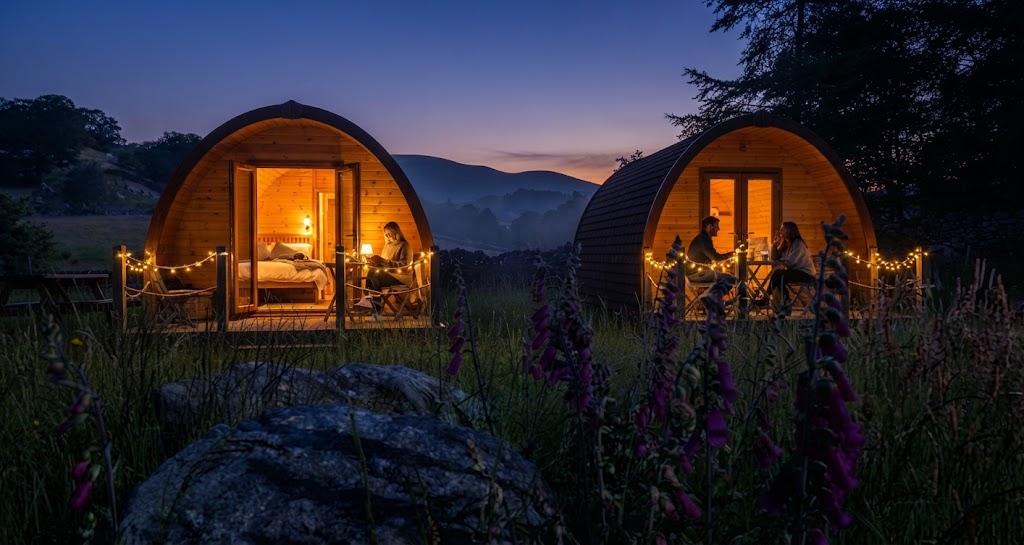
Photographs of glamping are shot at golden hour, in June, with a styled interior and no neighbours in frame. Reality includes a caravan two pitches away and rain on the skylight. That can still be a wonderful holiday. Just set the expectation yourself rather than letting the photographer set it.

Who writes this
Red Squirrel Glamping is a small editorial project, named after the Cumbrian population of Sciurus vulgaris that still holds out in the conifer plantations around Whinlatter and Grizedale. We are not affiliated with any site, operator or booking platform. We accept no payment for coverage.
Where we name an operator — Eden Heights Glamping, Herdwick Cottages, The Quiet Site, Wigwam Holidays and others — we are describing them from the outside, using published information and the general pattern of guest feedback. Every outbound link on this site carries a nofollow attribute. If something here is wrong or out of date, tell us and we will fix it.

Questions people ask
Is glamping in the Lake District worth the money compared with a cottage?
For two people on a short break, yes, often. A pod at £120 undercuts most Lakeland cottages, which frequently want three nights minimum in season. For a family of five staying a week, the maths flips and a cottage usually wins on cost per head.
Do I need to bring bedding?
Depends on the tier. Basic pods often supply a mattress and nothing else, so you bring a sleeping bag or your own duvet. Anything marketed as en-suite, luxury or boutique almost always includes made-up beds and towels. The listing will say. If it does not say, assume you are bringing bedding.
Can you glamp in the Lake District in winter?
Plenty of sites stay open through winter, and pods with a proper heater are genuinely cosy in January. Yurts and bell tents mostly close from late October. Expect shorter opening hours at nearby pubs and some site facilities reduced.
What is the difference between a camping pod and a glamping pod?
Mostly marketing. Both describe a curved insulated timber cabin. In practice, sites using "camping pod" tend to mean the simpler end — a mattress, a socket, a shared shower block. Sites using "glamping pod" more often mean en-suite with a kitchenette. Read the amenity list, ignore the label.
Is wild swimming allowed in the lakes near glamping sites?
Swimming is permitted in most Lake District waters, with restrictions on a few reservoirs such as Thirlmere and Haweswater. Windermere, Derwentwater, Ullswater and Coniston Water are all swum daily in summer. Cold water shock kills experienced swimmers, so acclimatise slowly and never enter alone.